
Sectors
Hospitality
Websites for restaurants, brasseries and caterers — with bookings, takeaway orders, gift vouchers and a menu the owner keeps up to date themselves.
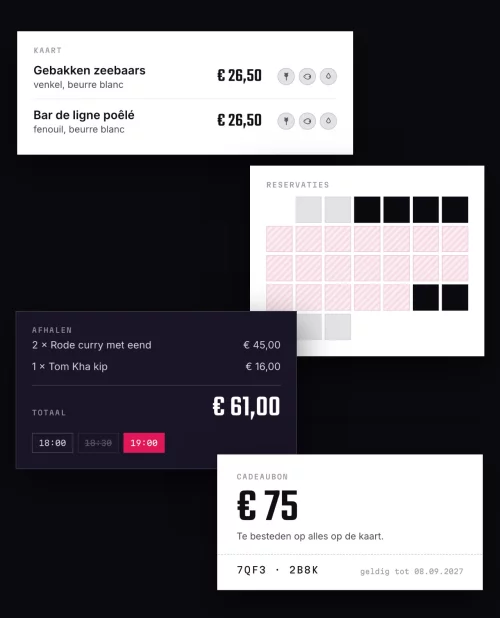
What hospitality taught us
We have been building hospitality websites for years: grill restaurants, brasseries, caterers, pizzerias, an Orval café, a Thai place, a Greek one. Each with its own problem — and once you have done enough of them, you know the problems before you walk in.
A restaurant website looks simple: photos, a menu, an address. What makes it hard are the bits that do not look like a website at all. A menu that changes every month. A closing day that falls differently this year. A guest who wants a table at eleven at night. And an allergy you cannot afford to get wrong.
The menu is the hard part
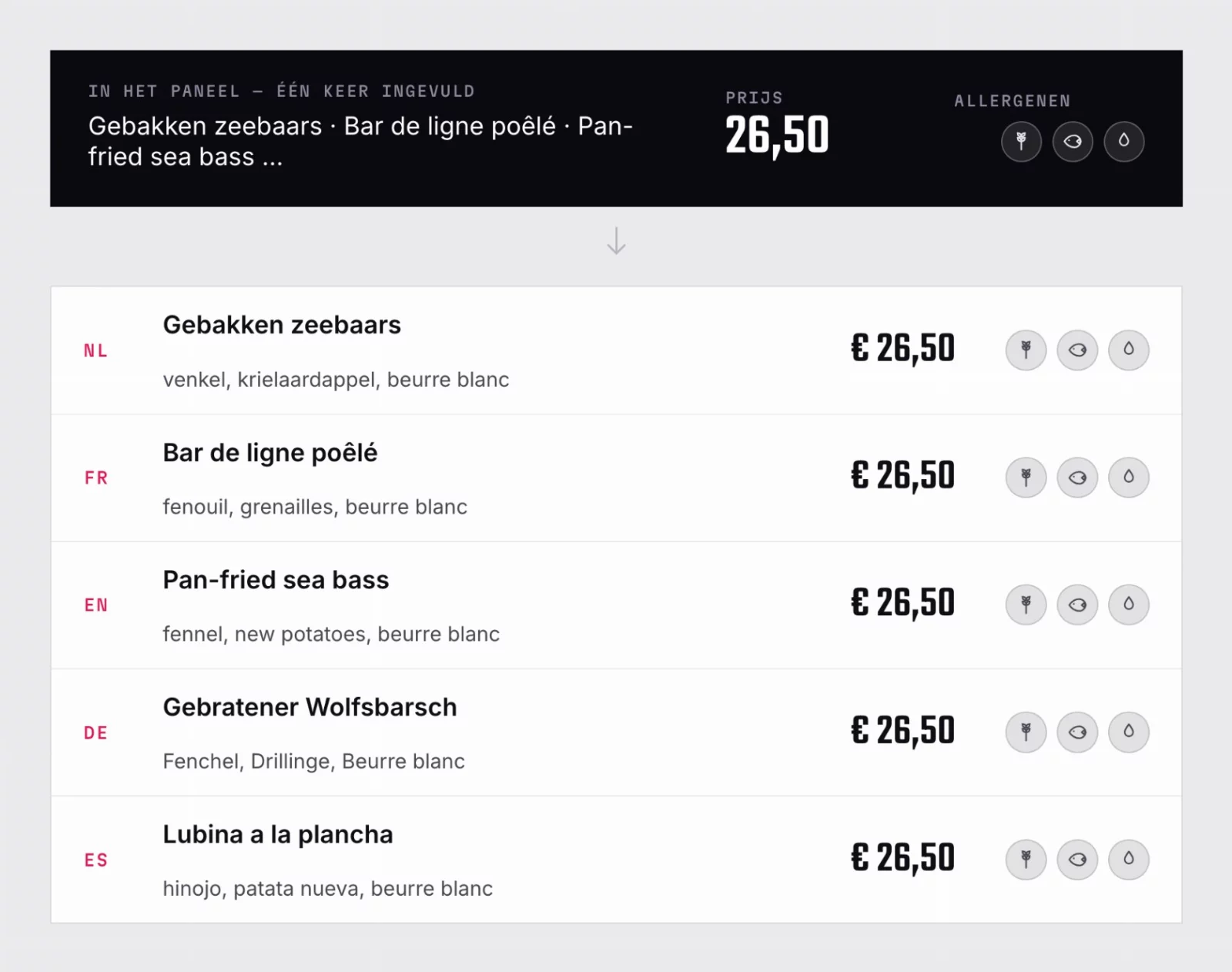
Nearly every hospitality site comes unstuck on the menu. It gets made in Word, exported as a PDF, and six months later it is still online listing dishes the kitchen stopped serving. Put it in the site properly and you retype it in five languages every time something changes.
At ’t Vosken in Ghent we sorted that out with one data model: every dish is a single row, with its name in five languages — Dutch, French, English, German and Spanish — side by side. Change the price and you change it once. Each dish also has its allergens ticked, so a guest with a nut or gluten allergy can check for themselves instead of having to ask the floor staff.
Closed on Mondays, and the first week of July
This is the dullest thing we ever built and at the same time the one an ordinary website gets wrong most often. Opening hours are not a line of text in the footer: there are fixed days, there are exceptions, there is the annual holiday, and there is that one bank holiday when you are open after all.
At Veedeebee's all of it sits in the panel. Fixed hours per day, exceptions per date, holiday periods. The site works out by itself whether you are open, and — more to the point — the booking system will not take a table on a day the kitchen is shut.

Bookings without commission
Most places take their bookings through a platform. That works, but it costs a fee per cover, and the guest who books there lands in that platform’s database — which then emails them about other restaurants nearby.
So we built our own booking system. It runs at Veedeebee's and does what is needed: tables and capacity, confirmation by email, tied to the opening hours and holidays. For the floor there is a dashboard that groups by day, filters and exports the list — exactly the same selection as the one on screen.
No commission per booking, and the guests stay the restaurant’s own.

Takeaway and ordering
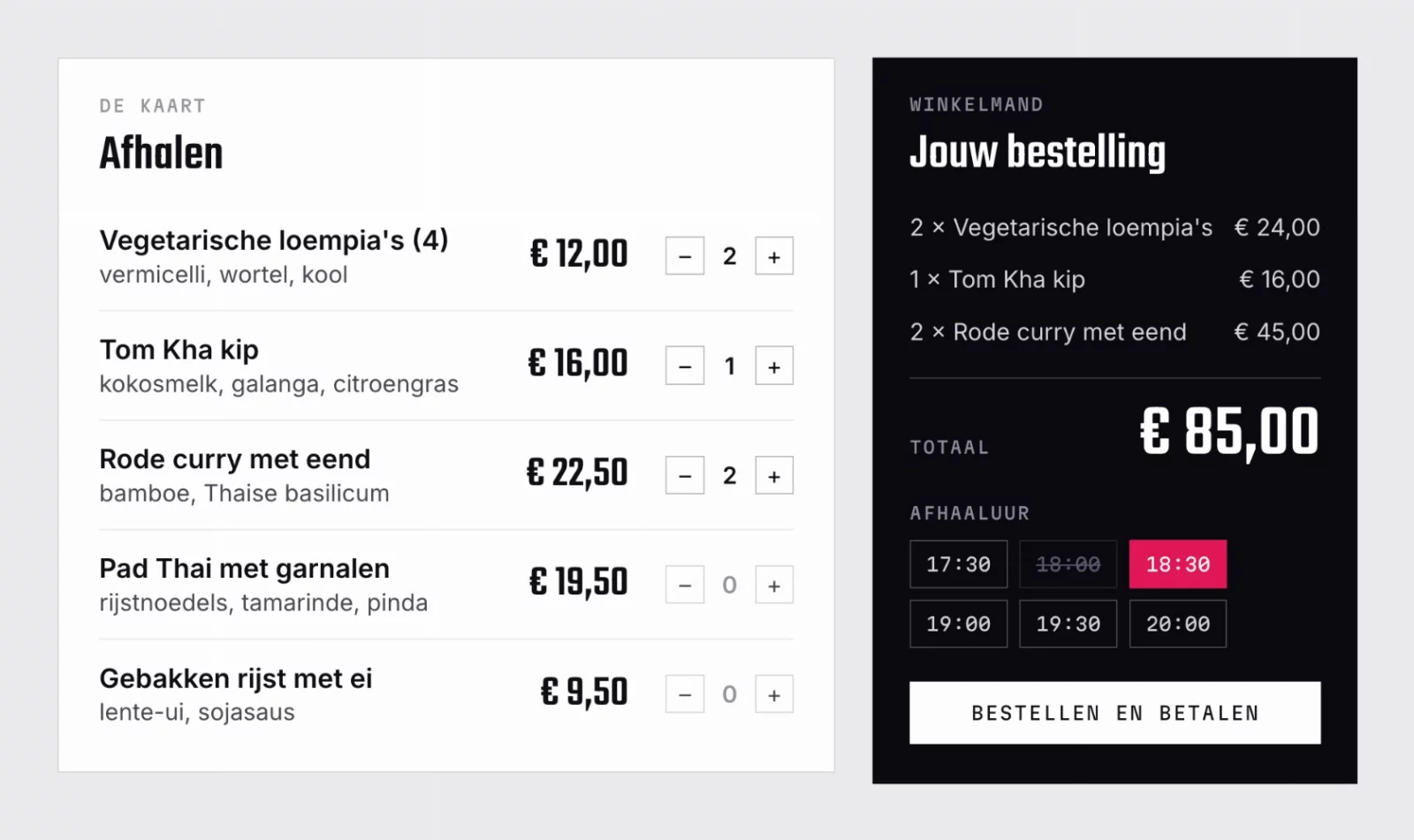
For Thai Thae we built an ordering module: tick the dishes, pick a collection time, pay. The same system now runs at Veedeebee's as well, extended with several collection points.
The most work in that was not the basket but the time slots: how many orders the kitchen can handle per quarter of an hour, and what happens on a busy Friday.
Gift vouchers
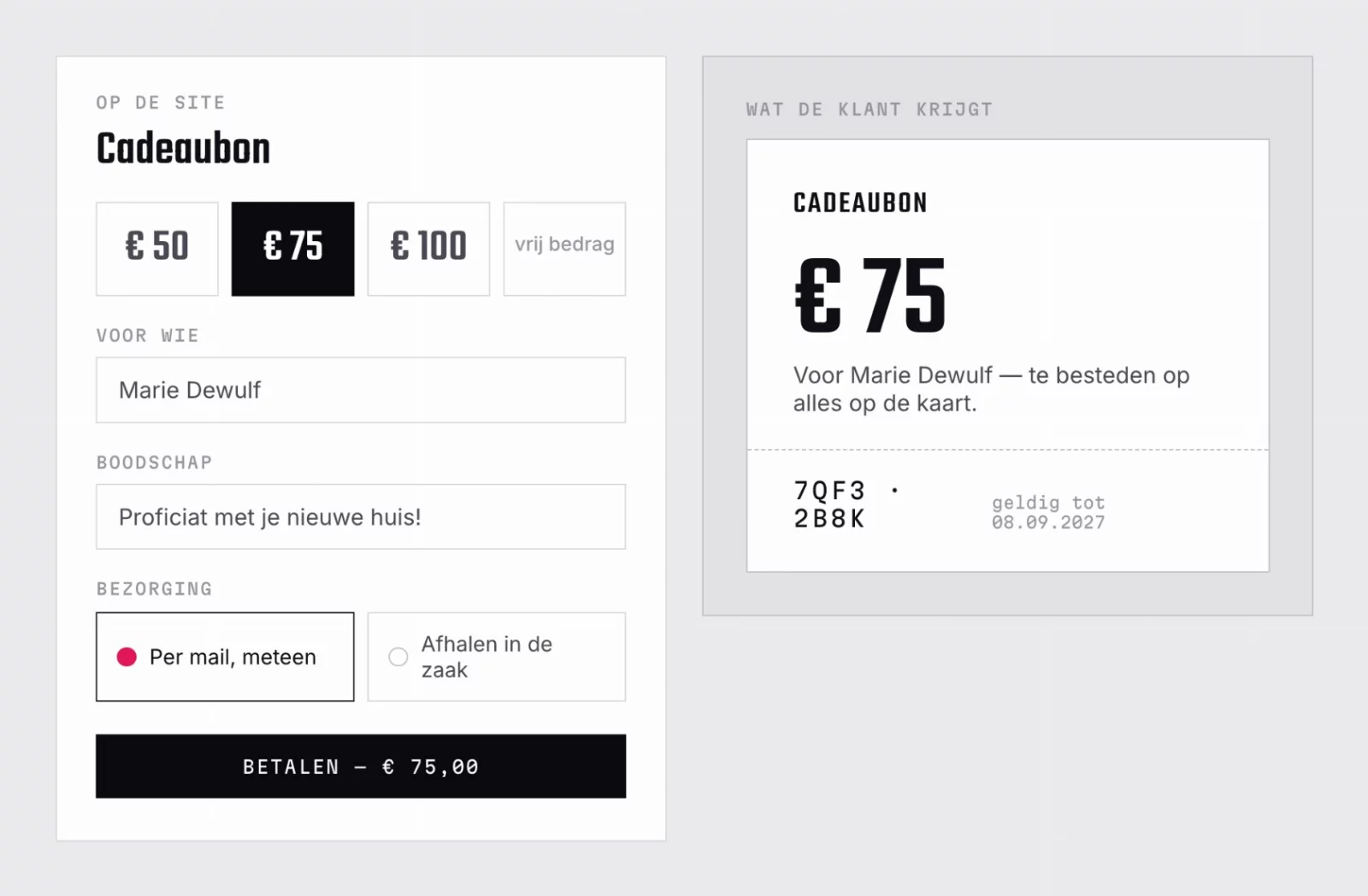
A gift voucher is a small product with a lot of edge cases. It is bought and paid for online, delivered by email, handed in at the restaurant, and must not be used twice.
At Fou du Goût the whole thing runs online, paid through Mollie, with a voucher you can forward or print straight away. For the business it means no more drawer full of paper vouchers, and around the holidays it saves a great many phone calls.
A restaurant site is only finished when the owner can keep it up to date themselves on a Tuesday morning.
A few of the places we built for
De Abt van Orval — Ghent. The only Orval restaurant in Flanders, with a meeting centre and group bookings.
Veedeebee's — Oostduinkerke. Grill restaurant at Camping Dunepark, trilingual, with bookings, takeaway and opening-hours management.
’t Vosken — Ghent. Brasserie beside Saint Bavo’s Cathedral, in five languages, with allergens per dish.
Fou du Goût — caterer, with gift vouchers and online payment.
Jan Van den Bon — Ghent. A byword among serious eaters since 1986.
And Il Padrino, Thai Thae, Restaurant Athene, Gusto and Pizza La Villa, among others.
How it starts
Usually with a conversation on the premises, outside service hours. We look at what is going wrong now, what you want to be able to change yourself and what really has to work online — because not every place needs bookings, and not every place wants takeaway.
After that we write a proposal with a fixed price. No commission per booking, no surprises afterwards.